
Prix de la SCEB
Tous les deux ans, la SCEB cherche à reconnaître et à célébrer les contributions et les réalisations des personnes qui ont contribué aux domaines de l'épidémiologie et de la biostatistique, ainsi qu’à la Société.
NOUVEAUX PRIX
Prix IRSC-IC et SCÉB en épidémiologie et biostatistique du cancer
La Société canadienne d’épidémiologie et de biostatistique (SCÉB) s’associe aux Instituts de recherche en santé du Canada – Institut du cancer (IRSC-IC) afin de reconnaître conjointement les réalisations, le leadership et les contributions exceptionnelles des chercheuses et chercheurs en cancérologie partout au Canada, dans le cadre du nouveau Programme de prix commandités de l’IRSC-IC.
Le Prix Geoffrey R. Howe pour contribution exceptionnelle
L'objectif de ce prix est de reconnaître une contribution exceptionnelle à la recherche et/ou à la pratique épidémiologiques et/ou biostatistiques.
Prix d’excellence de la SCEB pour l'ensemble des réalisations en carrière
L'objectif de ce prix est de rendre hommage à une personne qui a consacré sa carrière au domaine de l'épidémiologie ou de la biostatistique au Canada et qui a réalisé des contributions exceptionnelles au cours de celle-ci.
Prix de début de carrière de la SCEB
Ce prix est décerné pour reconnaître une étoile montante dans le domaine de l'épidémiologie ou de la biostatistique au Canada dans les 5 ans suivant le dernier diplôme (p. ex. doctorat).
Prix de la SCEB pour services exceptionnels
Ce prix a été créé pour reconnaître les personnes qui ont apporté une contribution importante à la Société.
Prix de présentation de la SCEB pour les étudiants
Décernés pour les meilleures présentations (affiches et orales) à la conférence de la SCEB. Ces prix sont basés sur l’évaluation du résumé soumis par les étudiants et leur présentation lors de la conférence.
Lauréats des prix 2025
2025 Early Career Award - Brice Kuimi
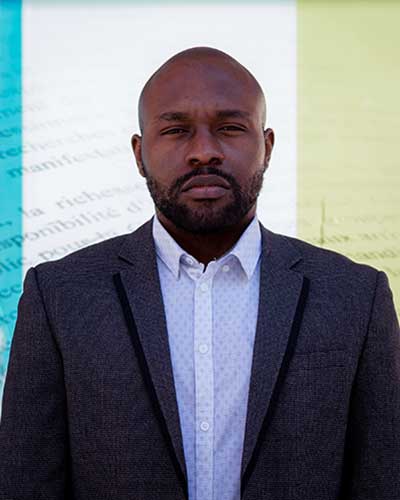
Brice Batomen is an epidemiologist and Assistant Professor of Epidemiology at the Dalla Lana School of Public Health, University of Toronto. His work focuses on access to trauma care and injury prevention in Canada. His current research goals aim to identify the characteristics of the road network that promote active transportation and safety using innovative data collection and analytic methods. He earned his PhD in epidemiology at McGill University, after completing his Master of Science in Epidemiology at Laval University, and his undergraduate studies in Biomedical Sciences at the University of Dschang, Cameroon.
2025 Lifetime Achievement Award - Kristan Aronson

Kristan J Aronson, PhD. After degrees in Epidemiology and Biostatistics from McGill University and the University of Toronto, Dr Aronson was awarded a post-doctoral fellowship at the International Agency for Research on Cancer. For over three decades, Dr Aronson taught epidemiologic methods and many other courses and mentored trainees at the graduate level, first at the University of Toronto then Queen’s University for the majority of her career. Dr Aronson’s research on meta-analysis methods and cancer risk associated with environmental and occupational exposureshas impacted public health policy, workplace regulations, and international cancer causation assessment. Honours include a graduate scholarship in her name donated by a former studentand a Research Scholar Award, Research Excellence Award, Career Scientist Award, several visiting professorships, and the Queen Elizabeth II Golden Jubilee Medal in recognition of volunteer service. Service roles include hundreds of scientific committees and peer-review contributions in Canada and internationally, founding member of the Queen’s University Sinclair Cancer Research Institute, and Chair of the Advisory Board for the CIHR Institute of Population and Public Health. Dr Aronson gratefully acknowledges the contributions of many collaborators including trainees.
2025 Geoffrey R. Howe Outstanding Contribution Award - Tibor Schuster

Dr Tibor Schuster accomplished his early academic and professional education at the Ludwig Maximilian University (LMU) of Munich and the Institute for Medical Statistics and Epidemiology at the Technical University of Munich (TUM). He obtained his doctorate in Biostatistics from the Faculty of Mathematics, Informatics and Statistics at the LMU. Subsequently, he received a post-doctoral award from the Canadian Network of Observational Drug Effect Studies (CNODES) and carried out a post-doctoral fellowship in pharmacoepidemiology at the Department of Epidemiology, Biostatistics and Occupational Health, McGill University and the Centre for Clinical Epidemiology, Lady Davis Institute for Medical Research in Montreal. He continued with a research fellowship at the Murdoch Childrens Research Institute in Melbourne where he was acting Director of Biostatistics at the newly established Melbourne Children’s Trial Centre in 2015. In August 2016, Dr Schuster started a tenure-track faculty position as Assistant Professor at the Department of Family Medicine. He is holder of a Tier II Canada Research Chair in Biostatistical Methods for Primary Care Research. In 2019, he's been the acting Director of the Methods Development Component of the Quebec SPOR-SUPPORT (Strategy for Patient-Oriented Research Support for People and Patient-Oriented Research and Trials) Unit and since July 2019, the Graduate Program Director for the Ph.D. program and Postdoctoral Fellows at the Department of Family Medicine. Dr Schuster taught biostatistical methods at renowned institutions in Germany, Canada and Australia. He acted and is acting as supervisor and mentor for graduate and doctoral students in the fields of biostatistics, epidemiology and bio-medical research.
2025 Distinguished Service Award - Mark Ferro
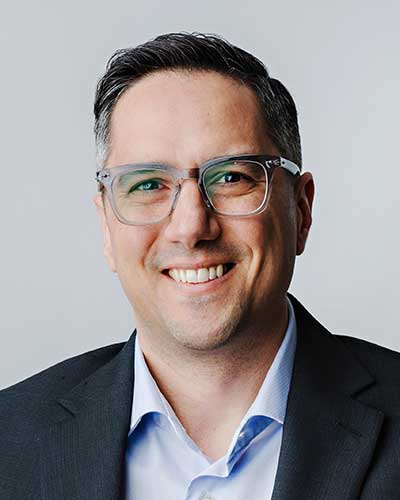
Dr. Mark Ferro is the Canada Research Chair in Youth Mental Health and Associate Professor in the School of Public Health Sciences at the University of Waterloo. He has been an active member of CSEB for over 15 years participating in the biennial conferences as an abstract reviewer, attendee, and speaker. In 2018, Dr. Ferro was elected to the CSEB Board of Directors. He served as President from 2020 to 2022 and oversaw CSEB’s first virtual conference in 2021on account of the COVID-19 pandemic. He formally and informally mentors trainee and early career CSEB members.
Dr. Ferro also serves CSEB’s mission more broadly through his roles asan Associate Editor of Child: Care, Health and Development and a Member of the Editorial Board of the Canadian Journal of Psychiatry, where he focuses on research related to child psychiatric epidemiology.